
Falmouth Resident Lookup Coverage
Different Falmouth records answer different questions. The town's Assessing WebPro connects an owner of record to a parcel, while the Barnstable Registry public index supplies the recorded grantor, grantee, legal description, and recording trail. Neither one proves that every person in a home lives there. The state voter-status form is an individual confirmation tool, and a local voter-list request has its own public-field limits. Court, vital, license, business, obituary, and probate sources each supply a narrower fact that can help distinguish people with the same name.
| Record | What It Confirms | Where | Access |
|---|---|---|---|
| Assessing parcel | Owner of record and physical parcel address | Falmouth WebPro | Public data; detail card or office may hold more fields. |
| Recorded deed | Named parties, recording trail, legal description | Barnstable Registry for Falmouth land | Free index and research image; clean image is priced per page. |
| Voter status or list | Registration status or allowed local public fields | Secretary portal and Falmouth Town Clerk | Individual portal needs name, birth date, and ZIP; confidential voters are excluded. |
| Court docket | Party, case number, type, status, events, disposition | MassCourts and the Falmouth-serving court clerk | Remote visibility varies; the official file stays with the clerk or register. |
| Vital record | Recorded birth, death, marriage, or divorce event | Town Clerk, RVRS, Archives, or Probate Court | Access changes by event, year, and statutory restriction. |
| License or filing | Credential, entity role, or business relationship | State licensing and Corporations systems | Public verification, but an address is not proof of residence. |
When the person is connected to a Falmouth address, begin with the parcel and then confirm the deed. When the question involves a life event, begin with the proper vital-record custodian. For a court or probate lead, note the court division and docket number before requesting a copy. That sequence keeps a resident lookup tied to records that have a defined keeper and date.
Falmouth Name Match Records
A close name match is only a lead. Falmouth research is especially prone to false matches when an older directory uses initials, a deed names a trust or estate, or a family used a married, maiden, Portuguese, or Cape Verdean spelling. Compare the middle initial, record date, street or ZIP, relatives named in a vital or probate record, and the legal description on any deed. A mailing address can point to correspondence away from the parcel, so it should not stand alone. Record the exact spelling shown in each source rather than silently changing it.
- Write down the complete name, any initials, former surnames, and the Falmouth address or village already known.
- Search WebPro by owner name, then open the property detail to capture the parcel ID, situs, sale reference, and book or page clue.
- Search the Registry by the named party and compare the deed's legal description with the parcel before treating two names as one person.
- Use court, voter, vital, or license records only for the separate fact each custodian actually maintains.
- Keep a date beside every match, then discard leads that conflict on identity, place, or time.
Falmouth's library and historical collections can help with older names, but a modern identity still needs a current, authoritative cross-check. The historical volumes and their limits are described in the Falmouth city directory collections.
Note: A shared surname, an address resemblance, or one database result is not enough to identify a Falmouth resident.
Falmouth Court Name Records
Falmouth court matters are served through Barnstable District Court, Barnstable Superior Court, and Barnstable Probate and Family Court. Massachusetts Trial Court Case Access has Name, Case Type, Case Number, and Ticket or Citation routes. On the civil name tab, the last name and first name are required, with optional middle name and suffix. Department, division, location, party type, case status, and date filters narrow results. A name hit is not identity proof, and some case types or documents are not available remotely.
| Docket item | What the visible result can show |
|---|---|
| Party identity | Full party name, business name when used, and party type such as plaintiff, defendant, or trustee. |
| Case placement | Court department, division, location, and the case or docket number. |
| Case activity | Case type, case status, docket events, disposition details, and sometimes hearing information. |
| Dates | Filing and event dates, plus date-range filters where the portal makes them available. |
| Documents | Availability that varies by department and case type; the clerk or register holds the official public file. |
Probate and Family cases are a focused route for a Falmouth estate or heir question. Online probate coverage generally reaches back to 2000, but impounded material remains unavailable without an order. Sealed, juvenile, adoption, abuse-prevention, harassment, and sensitive family matters are not dependable remote resident lookup sources. Ask the relevant clerk about public-file access and certified-copy procedures instead of inferring a result that the portal does not show.
Falmouth Vital Record Routes
For a Falmouth birth, death, or marriage record, custody depends on the event and its year. The Falmouth Town Clerk issues local certificates in person, by mail with a self-addressed stamped envelope and Town of Falmouth check, or online. The local certificate fee is $10. The Massachusetts Archives handles certified copies from 1841 through 1935 for $3, while the Registry of Vital Records and Statistics handles 1936 forward. Marriage records follow the location where the license or intention was filed, not necessarily the ceremony location.
Some vital records carry restrictions. The town and state identify special rules for births to unwed parents, related marriage records, pre-adoption records, and death-record Social Security details. Birth and marriage records become generally more open after 90 years and deaths after 50 years, subject to the current law and exceptions. Use the custodian's live instructions when a Falmouth resident lookup needs a certificate, especially for a recent event.
The state vital-record ordering instructions show the official state route and current eligibility details.
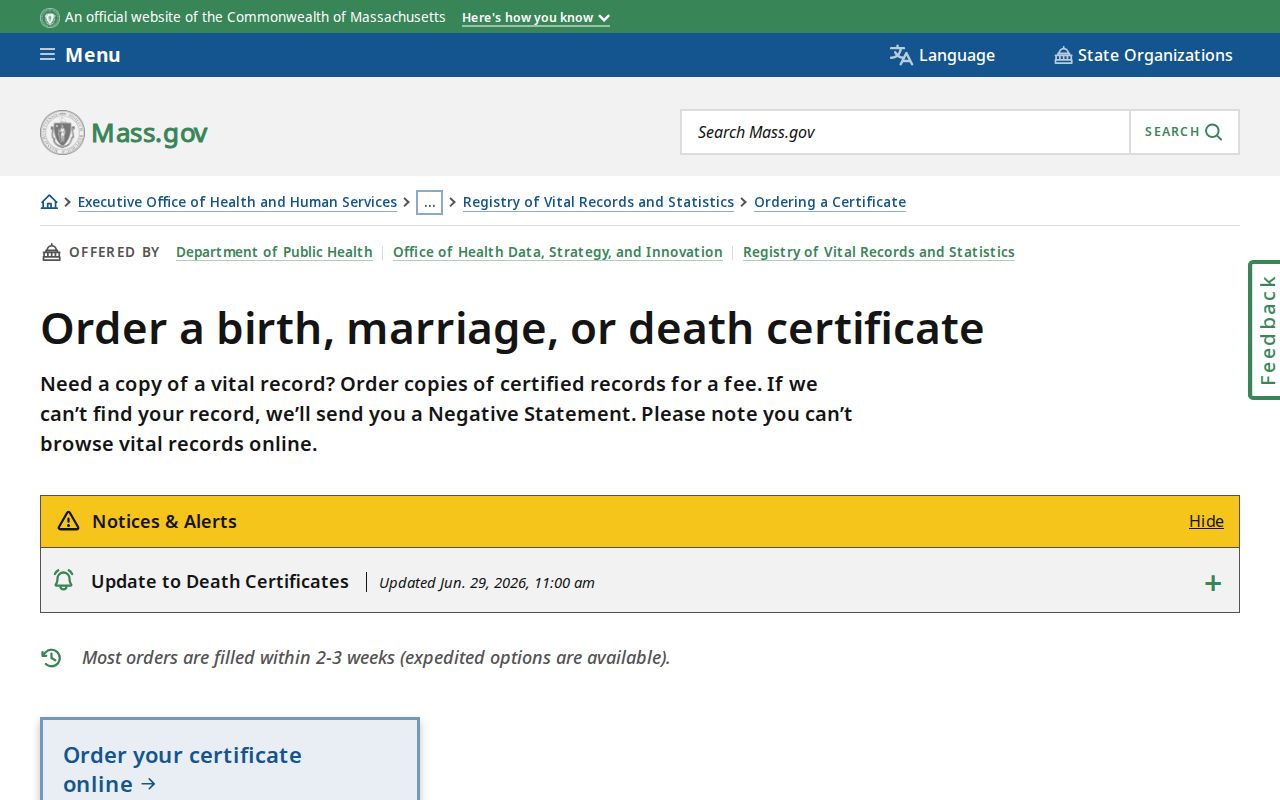
Use the form and office that hold the relevant Falmouth event. A certificate proves the custodian's recorded event, while a compiled genealogy entry or obituary can only support the search trail.
Verifying a Falmouth Resident Lookup
Verification means lining up independent records without making one source say more than it does. Start with the parcel or supplied address, confirm a named property party in the Registry, then use the court, vital, voter, or licensing path that fits the question. For a Falmouth heir search, an obituary or death record can lead to a Probate and Family docket, followed by the public estate file and any executor deed. For a classmate or family reconnection, yearbooks and the Falmouth Enterprise are historical evidence, not current residence proof.
- Anchor the name to a Falmouth parcel or another dated, official record.
- Match the parcel ID, legal description, owner name, and deed party before relying on an address connection.
- Use the MassCourts filters for the proper department, location, party type, and date range.
- Confirm a life event through the Town Clerk, RVRS, Archives, or Probate Court that holds it.
- Request a certified copy from the appropriate custodian only when the record and access rule support the request.
- Docket
- A court's running case record, which lists the case number, parties, filings, events, and disposition information.
- Index and image
- An index helps locate a record by names or dates. An image is the scanned document itself, and its access can differ from the index.
- Certified copy
- A copy issued or authenticated by the record custodian for a defined official purpose. It is different from a research printout.
In Falmouth property work, the situs is the parcel's physical address, while a mailing address is only the tax correspondence location. That distinction helps prevent a resident lookup from treating a mailing clue as proof of occupancy.
Falmouth License Record Checks
A state license or business filing can verify a regulatory or business connection, but it does not establish where someone lives. The Massachusetts Corporations Division permits searches by entity name, individual name, identification number, or filing number. Its filings can include officers, managers, registered agents, business addresses, and dates. Falmouth business certificates are held by the Town Clerk, with a four-year certificate listed at $40 and discontinuance at $5. Request a dated local copy or list from the clerk rather than assuming there is a public local name index.
For professional credentials, the Commonwealth's health-profession system searches by last name or license number. Occupational boards use individual or business tabs with name, city, state, ZIP, board, type, or license-number filters. The Massachusetts occupational license instructions identify the appropriate ePlace or eLIPSE route. Treat the result as a credential check at the displayed date, not a Falmouth resident lookup result.
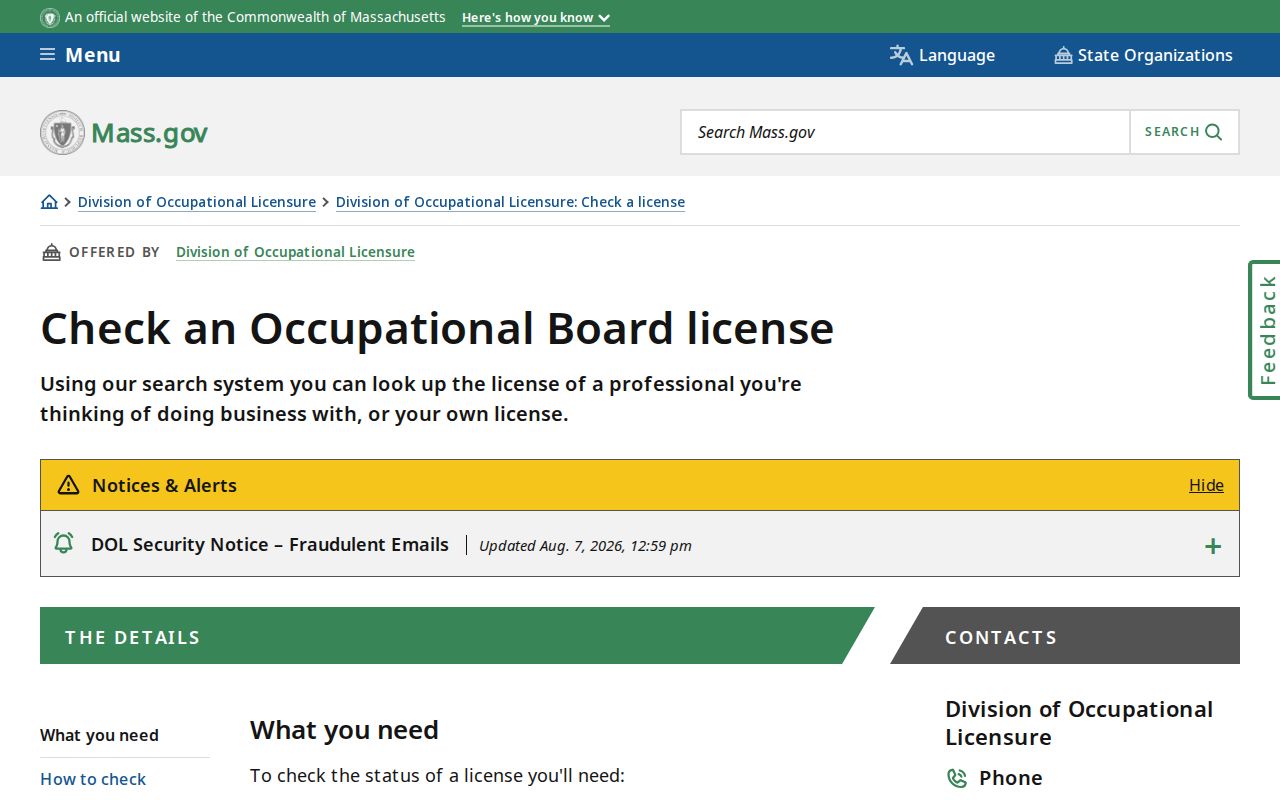
Match a license holder to other Falmouth records only when the name, date, and lawful purpose support the connection. A license record may display a practice or mailing location instead of a home address.
Falmouth Resident Lookup Through Yearbooks
Falmouth has a strong historical people trail, although it is not a continuous current directory. The Falmouth Public Library special collections hold yearbooks, directories, Blue Books, street lists, newspapers, Sanborn maps, and genealogy resources. Falmouth High yearbooks run from 1931 to the present and can support a classmate or family-history search. The Falmouth Enterprise begins in 1896, and its Mail Away Edition index was built around local personalities and life. Those sources can surface a date, name variant, family relationship, or former address for later confirmation.
The record trail changes with time. Library documents back to 1792 were rebound and digitized through a Community Preservation Fund project, while the 1903 A. E. Foss directory, later street lists, and current parcel records each capture a different moment. Seasonal Blue Books should not be read as a full year-round resident list. Use a historical Falmouth finding to locate the next official custodian, then keep its date and limits clear.
Note: A yearbook, newspaper notice, or directory entry is valuable historical evidence, but it cannot confirm a person's present address.
Falmouth Records Request Path
When no public portal carries the needed existing record, send a focused request to the custodian. Massachusetts Public Records Law is M.G.L. c.66 §10, with exemptions in M.G.L. c.4 §7(26). Falmouth states that a municipality must provide access or explain a delay or denial within 10 business days. The law does not require an agency to create a new record or answer a broad question. Describe the record type, date range, department, subject, requested format, and delivery method instead.
The Falmouth public-records request form routes requests to the right department. A court file goes to its clerk or register, an assessment question to Assessing, and a town vital record to the Town Clerk. The first four labor hours are generally free under the state guidance; later labor, copying, postage, or authorized redaction can create charges. A denial can be appealed to the Supervisor of Records within 90 days.
Falmouth Resident Lookup Privacy
Not every Falmouth fact belongs in a searchable record. Renters and household members may never appear in a property record. Confidential voters, juvenile or impounded court records, protected adoption material, restricted vital records, DMV information, utility customer records, and private library-user records are not ordinary lookup fields. The Massachusetts Address Confidentiality Program provides a substitute address and confidential-voter protections for qualified participants. It does not erase prior disclosures, and a searcher must never attempt to reverse a substitute address.
For a wrong Falmouth record, contact the office that maintains it and ask for its correction, amendment, annotation, or restricted-access process with supporting documents. Do not ask a custodian to erase an accurate historical record merely because it is inconvenient. Public records remain subject to the keeper's access rules, and a missing result is not proof that no record exists.
Lawful use. Use a Falmouth resident lookup for personal, lawful research and legitimate record questions. Never use any result to stalk, harass, threaten, or expose a protected person.